
By Bryan
Visionary Business Leadership: The Architecture of Disruption
Success is not a finish line to be decorated and defended. For anyone practicing Visionary Business Leadership, success is a temporary platform you use to launch the next leap. The moment your brand stands on a pedestal, a paradox begins: standing still feels safe, but standing still guarantees decline. This article lays out a practical framework to become an architect of disruption rather than a manager of the past.
Table of Contents
- The paradox of the pedestal
- What you will gain from this approach
- The price of evolution
- Self-disruption imperative: the day zero mentality
- Sacred cow audit: make room for the new
- Liquid leadership and the crisis of momentum
- Powering the narrative engine
- Building a legacy of disruption
- 90-day self-disruption plan (actionable roadmap)
- Tools to institutionalize disruption
- Final thoughts
- FAQ
The paradox of the pedestal
When a product or company reaches the top, instinct tells leaders to freeze: protect margins, defend patents, repeat the formula that worked. That defensive crouch creates walls that block your future. Great brands remain great because they are willing to “set fire” to their past wins and make space for the next idea.
They stayed icons because they were the first ones to set fire to them.
What you will gain from this approach
- Define how a stable narrative engine supports a disruptive product strategy.
- Identify and retire your organization’s sacred cows.
- Apply a liquid leadership model to pivot without losing purpose.
- Use strategic self-cannibalization to strengthen long-term market position.
- Recognize and escape the momentum trap that collapses legacy brands.
- Create a practical 90-day self-disruption plan for your core product or service.
The price of evolution
Evolution is not comfortable. It demands planned discomfort and the courage to abandon what once worked. Four common forces will fight change:
- Defensive walls versus open architecture. Traditional leaders build walls; visionary leaders build systems ready to evolve.
- The ego barrier. Ego convinces you the current way is the only way. That’s the hardest barrier to dismantle.
- Planned discomfort. Treat discomfort as a KPI: schedule it, tolerate it, and use it to test new models.
- Segmentation as risk. Protecting the status quo is actually a risky bet—competitors will exploit any gap.
Self-disruption imperative: the day zero mentality
A leader must wake up each day with one question in mind: if a competitor started today with no baggage, how would they beat us? The answer reveals the vulnerabilities you must address by intentionally breaking your own models before someone else does. This is not recklessness; it is tempo control. When you lead the tempo, competitors spend energy reacting to you.
Sacred cow audit: make room for the new
Every organization accumulates legacy beliefs and products that feel untouchable. These sacred cows are often anchors. A regular audit asks whether you would include each product or process if you were starting anew. If the answer is no, retire it.
- Day one question. If you were starting today, would this exist?
- Fearless cannibalization. Make your next product obsolete before a competitor does.
- Gap closure. Continuously fill gaps so competitors have no foothold.
- Audit belief systems. Test unspoken assumptions about what customers want.
Liquid leadership and the crisis of momentum
Liquid leadership holds a fixed purpose while remaining fluid in methods. Momentum can crush companies by convincing them to protect process over purpose. To avoid that:
- Break the innovation trap. Use the capital from a win to fund the next disruption.
- Purpose over process. Never let how you work become more important than why you exist.
- Rapid adaptation. Tactics must shift instantly when markets pivot; vision remains your north star.
- Strategic detachment. Practice detaching from your current model long enough to redesign it.
Powering the narrative engine
Disruption without narrative is chaotic. A strong narrative engine is the brand’s stabilizing force: it explains why changes matter to customers, keeps talent aligned during pivots, and converts employees into culture carriers.
- Fixed vision, fluid tactics. The narrative anchors experiments.
- Architecture hub. Narrative sits at the center of product, culture, and recruitment.
- Recruit culture carriers. Build employees who evangelize your vision, not just do a job.
- Believe first. Narrative focuses on what you believe, not only what you build.
Building a legacy of disruption
Visionary brands are anti-fragile: they grow stronger through controlled shocks. Combining a disruptive architecture with a stabilizing narrative produces a brand that defines the future rather than survives it. The choice is yours: be a bridge to the future or a monument to the past.
Questions to guide your next 90 days
- Are you building momentum to the past or a bridge to the future?
- Which sacred cow will you audit and retire first?
- What is your day zero vulnerability and how will you address it by self-disruption?
90-day self-disruption plan (actionable roadmap)
- Week 1—Sacred cow audit: List top 3 products/processes you would not start with today. Decide which to retire.
- Weeks 2–3—Day zero simulation: Run a competitor simulation. Assign a team to imagine a zero-cost, zero-ego entrant and map attack vectors.
- Weeks 4–6—Prototype cannibalization: Build a minimum viable product that intentionally challenges your current offering.
- Weeks 7–9—Narrative alignment: Craft the story that links the old and new product—train sales and internal teams to tell it.
- Weeks 10–12—Market tempo test: Launch to early adopters, measure response, iterate, and plan the next disruptive move.
Tools to institutionalize disruption
- Sacred Cow Audit Checklist: Weekly diagnostic to find anchors.
- Liquid Leadership Framework: One-page guide to tactical flexibility.
- 90-day Disruption Roadmap: Template for orderly self-cannibalization.
Final thoughts
Disruption is a choice. If you choose it intentionally, you control the outcome. If you avoid it, the market will choose it for you. Build a narrative engine, practice liquid leadership, and make self-disruption part of the organization’s rhythm. That is how you practice true Visionary Business Leadership.
FAQ
How often should a company perform a sacred cow audit?
Quarterly at minimum. Fast-moving industries may require monthly mini-audits focused on high-risk products and processes. The goal is continuous pruning, not a one-time cleanup.
What does “day zero mentality” look like in practice?
It is a daily leadership question: if a competitor started now with no legacy costs, how would they beat us? Use the answers to prioritize experiments that preempt those attacks.
Is self-cannibalization risky for revenues?
Short-term revenue may shift, but strategic self-cannibalization protects long-term market share and margins. Fund new bets with capital from current wins and manage lifecycle timing to preserve brand equity.
How do you keep teams aligned during disruptive pivots?
Anchor every pivot in a clear narrative: why the change matters, who it serves, and how it fits into the long-term vision. Recruit and empower culture carriers who embody that story.
What is the single most important habit for visionary leaders?
Waking up with a day zero mindset and committing to planned discomfort. That habit keeps purpose fixed while methods remain fluid.
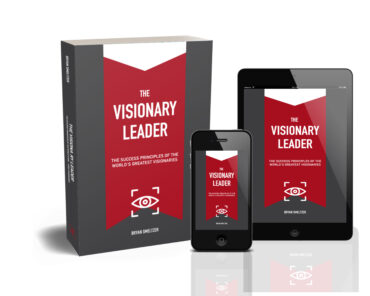
The Visionary Leader eBook! |
|
Get your eBook for Review on Amazon! |
| Click me |
This article was created from the video Becoming A Visionary Brand | SERIES | CHRONICLE 2 | The Architecture of Disruption with the help of AI.